


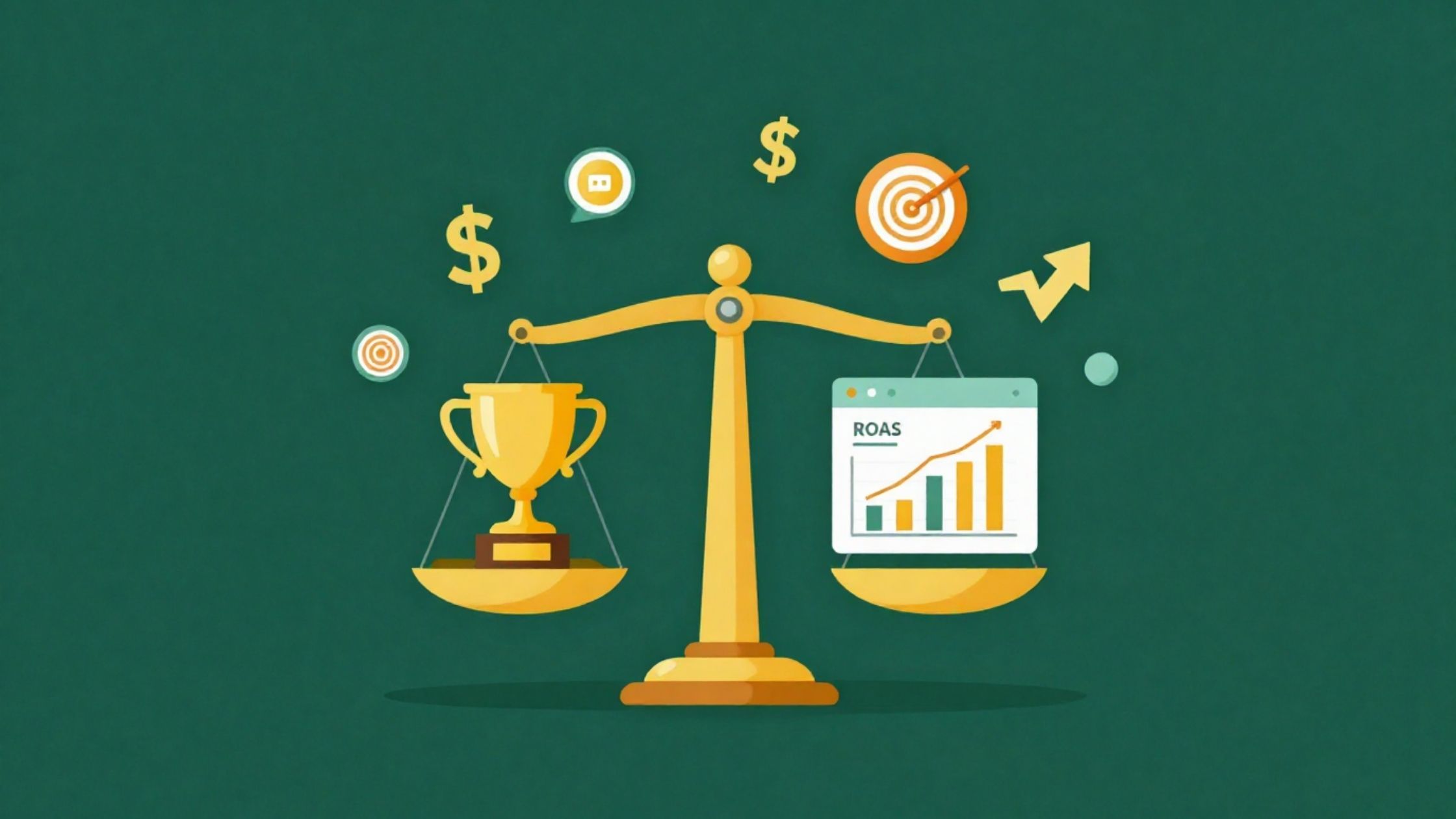
The marketing industry has become obsessed with performance metrics. Every dollar must show immediate ROAS. Every campaign needs attribution to revenue. Every channel gets evaluated on cost per acquisition. This relentless focus on measurable, short-term outcomes has created real business value, but it has also created a dangerous blind spot.
At Aumcore, we work with marketing leaders facing constant pressure to demonstrate ROI while also building brands that command premium pricing, reduce acquisition costs over time, and create sustainable competitive advantages. The tension between performance marketing and brand building is not theoretical. It plays out in every budget allocation decision, quarterly business review, and board presentation.
The reality is that performance marketing and brand building are not opposing strategies. They are complementary systems that work best when balanced strategically. Performance marketing harvests existing demand and converts ready buyers. Brand building creates future demand and makes performance marketing more efficient. The brands winning in 2026 are those that have learned to invest in both while measuring each appropriately.
This article provides the strategic frameworks, budget allocation models, and measurement approaches we use to help clients balance short-term performance with long-term brand equity.
The Performance Trap: Why ROAS Alone Is Not Enough
Performance marketing delivers measurable results. You spend $10,000 on Google Ads, generate 50 leads, close 5 customers, and produce $75,000 in revenue. The math is clear: 7.5x ROAS. This clarity is seductive, especially when defending budgets to CFOs and boards.
But exclusive focus on performance creates compounding problems over time:
Diminishing Returns And Rising Costs
As you saturate high-intent audiences with performance campaigns, cost per acquisition rises while conversion rates decline. Without brand building to expand awareness and consideration, the pool of convertible demand shrinks.
Commoditization And Price Sensitivity
Performance marketing captures people already in buying mode, often comparing multiple options. Without brand differentiation, the sale goes to whoever bids highest or offers the lowest price, compressing margins.
Vulnerability To Platform Changes
Brands dependent on performance channels are exposed when algorithm changes, privacy regulations, or competitive dynamics shift. iOS privacy updates, cookie deprecation, and rising CPMs have devastated performance-only strategies in recent years.
Zero Brand Equity Accumulation
Performance spending disappears the moment you stop. Brand building compounds. Every dollar invested in brand awareness makes future performance marketing more efficient by creating preference before the purchase moment.
Talent And Creativity Constraints
Performance optimization rewards incremental testing of minor variables. Brand building demands creative excellence and strategic thinking that attracts different talent and drives breakthrough rather than marginal improvement.
The most telling data comes from Airbnb. After years of performance-heavy marketing, they shifted back to brand building in 2021 with their “Made Possible by Hosts” campaign, resulting in significant traffic increases and reduced dependency on paid channels. The lesson is clear: performance alone eventually hits efficiency ceilings that only brand investment can break through.
The Brand Advantage: What Long-Term Investment Creates
Brand building operates on different timelines and delivers different types of value than performance marketing.
Pricing Power And Margin Expansion
Strong brands command premium pricing because customers perceive differentiated value beyond functional benefits. This margin expansion often exceeds the revenue gains from performance optimization.
Reduced Customer Acquisition Cost Over Time
As brand awareness grows, more prospects enter the funnel already familiar with and favorably disposed toward the brand. Performance marketing converts these warmer audiences more efficiently.
Organic And Direct Traffic Growth
Brand investment drives branded search, direct traffic, and word-of-mouth that reduces reliance on paid channels. This creates compounding returns as organic channels scale.
Category Expansion And New Market Entry
Strong brands can extend into new products or markets more easily because brand equity transfers. Performance marketing must be rebuilt from scratch in every new category.
Resilience During Market Disruptions
When economic downturns, platform changes, or competitive shifts happen, brands with equity maintain performance while others see dramatic declines. Brand investment is insurance against volatility.
Talent Attraction And Partnership Opportunities
Strong brands attract better employees, partners, and investors because they represent stability and growth potential. This multiplies value beyond marketing ROI.
The challenge is that these benefits accrue over months and years, not days and weeks. They show up in metrics like aided and unaided brand awareness, consideration rates, Net Promoter Score, and long-term customer value rather than immediate ROAS.
The Optimal Balance: Research-Backed Frameworks
Extensive research by Les Binet and Peter Field, analyzing 996 IPA effectiveness case studies, established the foundational framework that still guides best practice in 2026.
The 60/40 Rule
The research found that optimal long-term business results come from allocating approximately 60% of marketing budget to brand building and 40% to sales activation.
Brand Building (60%) Includes
- Mass-reach awareness campaigns across video, display, and social
- Content marketing and thought leadership
- Sponsorships, partnerships, and experiential marketing
- PR and earned media efforts
- Brand campaigns focused on emotional connection rather than immediate conversion
Sales Activation (40%) Includes
- Search advertising targeting high-intent keywords
- Retargeting and remarketing campaigns
- Direct response social advertising
- Promotional campaigns and limited-time offers
- Bottom-funnel conversion optimization
This ratio maximizes combined short-term and long-term profit by ensuring sufficient demand creation to feed efficient demand harvesting.
Context-Specific Adjustments
The 60/40 split is a benchmark, not a universal prescription. Optimal allocation varies based on several factors.
Brand Maturity And Awareness Levels
- New brands or low-awareness brands should weight toward 70/30 or even 80/20 favoring brand building to establish recognition before performance efficiency materializes.
- Established brands with high awareness can shift toward 50/50 or even 40/60 because existing brand equity makes performance marketing more efficient.
Category Dynamics
- High-consideration, emotional categories like luxury goods, lifestyle brands, and aspirational products benefit from 70/30 splits favoring brand investment.
- Transactional, frequent-purchase categories can operate effectively at 60/40 or 50/50 because purchase cycles are shorter and brand building compounds faster.
Business Stage And Growth Objectives
- Early-stage companies seeking rapid customer acquisition may temporarily weight toward 50/50 or 40/60 favoring performance to generate revenue, accepting higher CAC.
- Growth-stage companies should shift toward 60/40 to build sustainable advantages before competition intensifies.
- Mature companies may operate at 50/50, leveraging established brand equity while maintaining market share through activation.
Competitive Environment
- Markets with intense competition require heavier brand investment to maintain differentiation as performance costs rise.
- Blue ocean categories with limited competition can weight toward performance because awareness naturally builds through category growth.
Dynamic Rebalancing Framework
Budget allocation should not be set annually and forgotten. We implement quarterly reviews that adjust allocation based on performance data.
If Brand Awareness Is Growing Faster Than Projected
Shift 5-10% toward performance to capitalize on increased top-funnel flow, as conversion efficiency should improve.
If Brand Awareness Growth Stalls
Increase brand investment by 5-10% to rebuild the foundation that drives long-term performance efficiency.
If CAC Is Rising Despite Stable Conversion Rates
This signals demand pool saturation, requiring increased brand investment to expand the addressable audience.
If Branded Search And Direct Traffic Are Declining
This is an immediate signal that brand health is deteriorating, requiring reallocation to awareness-building activities.
This dynamic approach prevents both over-investment in brand that leaves short-term revenue on the table and over-investment in performance that depletes future demand.
Budget Allocation Models By Company Stage
Here are specific allocation frameworks we use based on business context.
Startup Launch Phase (0-12 Months, Under $1M Revenue)
Brand: 40% | Performance: 60%
Rationale
Early revenue generation is critical for survival and fundraising. Performance marketing provides faster feedback loops for product-market fit validation. However, minimum brand investment establishes recognition that improves performance efficiency even in year one.
Brand Activities
- Foundational brand identity and messaging
- Website and content hub development
- Organic social presence and community building
- PR outreach and founder thought leadership
- Strategic partnerships and co-marketing
Performance Activities
- Search advertising for high-intent keywords
- Direct response social campaigns testing messaging
- Retargeting website visitors
- Conversion rate optimization
- Email marketing to early database
Timeline Expectations
- Performance delivers immediate leads and revenue
- Brand impact minimal in months 1-6, measurable in months 6-12
Growth Stage (1-3 Years, $1M-$10M Revenue)
Brand: 60% | Performance: 40%
Rationale
This is the critical window for building sustainable competitive advantages. Brand investment now creates compounding returns that reduce future CAC and enable premium positioning. Performance marketing harvests growing awareness.
Brand Activities
- Brand awareness campaigns across video, display, social
- Content marketing and SEO building organic visibility
- Thought leadership and industry presence
- Customer stories and case study development
- Community building and advocacy programs
Performance Activities
- Expanded search coverage across buyer journey
- Sophisticated retargeting and nurture campaigns
- Channel optimization and testing
- Account-based marketing for target segments
- Conversion optimization across funnel
Timeline Expectations
- Brand impact becomes measurable in months 6-12
- Performance efficiency improves as brand awareness grows
- Organic and direct traffic become significant channels by year 2-3
Scale Stage ($10M-$50M Revenue)
Brand: 55% | Performance: 45%
Rationale
Established brand equity allows slight shift toward performance to maximize revenue from existing awareness. Continued brand investment maintains differentiation as competition intensifies.
Brand Activities
- Category leadership positioning and campaigns
- Multi-channel awareness maintaining top-of-mind
- Expansion into new segments or markets through brand extension
- Major sponsorships or partnerships
- Customer advocacy and community at scale
Performance Activities
- Comprehensive paid search and social programs
- Advanced retargeting and personalization
- Account-based marketing with sales alignment
- Continuous optimization across all conversion points
- Marketing automation and lifecycle campaigns
Timeline Expectations
- Brand metrics plateau without continued investment
- Performance ROI benefits from established brand awareness
- Branded search and direct traffic represent 30-40% of new customer acquisition
Enterprise Stage ($50M+ Revenue)
Brand: 50% | Performance: 50%
Rationale
Substantial brand equity built over time allows balanced investment. Brand spending maintains market position and supports premium pricing. Performance maximizes revenue from large addressable market.
Brand Activities
- Major brand campaigns maintaining category dominance
- Sponsorships and experiential marketing
- Thought leadership at executive and industry level
- Innovation and product launch support
- Global expansion and localization
Performance Activities
- Comprehensive performance programs across all channels
- Sophisticated attribution and optimization
- Account-based programs for enterprise and strategic accounts
- Retention and expansion marketing
- International performance expansion
Timeline Expectations
- Brand and performance operate as integrated system
- Brand metrics require active maintenance to prevent decline
- Performance efficiency directly correlates with brand health
Measurement Frameworks: Different Metrics For Different Goals
The fundamental measurement challenge is that brand and performance operate on different timelines and produce different types of value.
Performance Marketing Metrics (Short-Term)
Immediate Conversion Metrics
- Return on ad spend (ROAS) by channel and campaign
- Cost per acquisition (CAC) and trending over time
- Conversion rate by traffic source and landing page
- Click-through rate and cost per click
- Lead volume and quality scores
Attribution And Revenue
- Last-click revenue attribution
- Same-day or 7-day conversion windows
- Pipeline created by campaign
- Marketing-sourced revenue percentage
- Channel-specific ROI
Optimization Indicators
- A/B test performance and statistical significance
- Quality Score and relevance metrics
- Audience segment performance
- Creative and messaging effectiveness
- Bid efficiency and budget pacing
Performance metrics should be monitored daily or weekly with optimization cycles measured in days or weeks.
Brand Building Metrics (Long-Term)
Awareness And Consideration
- Unaided brand awareness percentage in target market
- Aided brand awareness and recognition
- Brand consideration rates among in-market buyers
- Share of voice in category conversations
- Social listening sentiment and volume
Preference And Perception
- Net Promoter Score (NPS) and customer satisfaction
- Brand attribute ratings versus competitors
- Purchase intent among aware audiences
- Price premium willingness versus alternatives
- Brand health index composite scores
Organic Growth Indicators
- Branded search volume growth
- Direct traffic trends
- Organic social engagement and reach
- Earned media mentions and domain authority
- Word-of-mouth and referral rates
Long-Term Value Creation
- Customer lifetime value (LTV) by cohort
- Repeat purchase rates and retention
- LTV to CAC ratio trending
- Organic revenue as percentage of total
- Market share gains in target categories
Brand metrics should be tracked monthly or quarterly with strategic reviews every 6-12 months assessing multi-year trends.
Integrated Measurement Approaches
The most sophisticated approach connects short-term performance to long-term brand impact through multi-touch attribution and long-term multipliers.
Long-Term Multiplier Framework
This applies research-calibrated multipliers to brand spending that account for both immediate conversions and future value creation over 2-3 years.
For example, a brand campaign might show 1.5x short-term ROAS in immediate conversions, but when long-term effects are included, total ROI reaches 4-5x over 24-36 months.
Brand Halo Effects On Performance
This tracks how brand investment improves performance marketing efficiency:
- Conversion rate improvements on paid search as brand awareness grows
- Lower CPC and higher Quality Scores on branded versus non-branded terms
- Retargeting performance improvements as brand familiarity increases
- Email engagement rate correlation with brand awareness levels
Incrementality Testing
This isolates brand impact by running controlled experiments:
- Geo-holdout tests comparing markets with and without brand campaigns
- Brand lift studies measuring awareness and consideration changes
- Search lift analysis tracking branded and category search volume changes
- Matched market testing isolating brand campaign effects from other variables
This integrated measurement proves brand value in language CFOs and boards understand while maintaining appropriate long-term perspective.
Real-World Application: SaaS Brand Transformation
One of our B2B SaaS clients had grown to $25M ARR primarily through performance marketing. Their allocation was heavily weighted toward immediate ROAS: 20% brand, 80% performance. This worked well in early years, but by year four they faced serious challenges:
- CAC had increased 127% over 24 months despite optimization efforts
- Branded search volume had plateaued while competitors gained share of voice
- Sales cycles were lengthening as prospects compared multiple vendors
- Win rates against competitors were declining despite product superiority
- Retention rates were dropping as customers felt no emotional connection to the brand
We implemented a strategic rebalancing toward 60/40 brand/performance over 18 months.
Brand Investment (60%) Included
- Category leadership campaign positioning the company as innovators
- Thought leadership content program with executive visibility
- Customer success story campaign across video, social, and display
- Industry sponsorships and speaking engagements
- Brand refresh modernizing visual identity and messaging
Performance Optimization (40%) Focused On
- Bottom-funnel conversion and landing page optimization
- Branded search defense and competitor conquesting
- High-intent keyword expansion
- Retargeting sophistication and segmentation
- Account-based campaigns for enterprise targets
Results After 18 Months
- Unaided brand awareness in target market increased from 12% to 34%
- Branded search volume grew 156% while competitor search share declined
- CAC decreased 38% as organic and branded channels scaled
- Conversion rates across all paid channels improved 43% due to brand familiarity
- Win rates against competitors increased from 34% to 52%
- Direct and organic traffic grew from 18% to 41% of new customer acquisition
- Customer retention improved 23% as brand connection strengthened
- ARR growth accelerated from 28% to 47% annually
The transformation validated that brand investment pays off, but requires patience and appropriate measurement. Immediate ROAS on brand spending was lower than performance channels, but long-term business impact was substantially higher.
Real-World Application: DTC Brand Launch
A DTC wellness brand launched with significant venture funding and aggressive growth targets. Their initial instinct was heavy performance focus to prove traction quickly, but we advocated for balanced 60/40 allocation from day one.
Brand Foundation (60%) Focused On
- Distinctive visual identity and brand world creation
- Influencer partnerships building awareness and credibility
- Content marketing establishing category thought leadership
- PR campaign generating earned media and social proof
- Community building through social and email engagement
Performance Activation (40%) Emphasized
- Meta and TikTok direct response testing messaging
- Google Shopping and search for high-intent product queries
- Retargeting site visitors and content engagers
- Email conversion optimization and abandoned cart recovery
- Landing page testing and conversion rate improvement
Results Through First 24 Months
- Month 1-6: Higher CAC than pure performance approach but building awareness foundation
- Month 6-12: CAC stabilized as branded search and direct traffic emerged
- Month 12-18: CAC decreased 31% as organic channels scaled
- Month 18-24: Organic and direct represented 47% of revenue, dramatically below industry average CAC
Most importantly, when they reduced paid spending by 40% due to market conditions in month 20, revenue only declined 12% because brand equity maintained organic demand. Competitors relying on performance-only strategies saw 60-70% revenue drops with similar spending cuts.
Common Mistakes In Brand-Performance Balance
Several patterns consistently undermine attempts to balance brand and performance.
Measuring Brand With Performance Metrics
Expecting immediate ROAS from brand campaigns or abandoning brand investment when it does not produce short-term conversions.
Cutting Brand Spending During Downturns
Slashing the longer-term investment when immediate results are needed destroys future performance efficiency.
Over-Indexing On Last-Touch Attribution
Crediting only the final click before conversion undervalues all brand touchpoints that created awareness and consideration.
Inconsistent Brand Investment
Starting and stopping brand campaigns based on quarterly performance rather than maintaining consistent presence needed for awareness building.
Siloed Teams And Budgets
Separating brand and performance into different teams with conflicting KPIs and no shared accountability for business outcomes.
Neglecting Creative Excellence
Treating brand as media placement rather than investing in compelling creative that actually builds emotional connection and differentiation.
Why Senior Leaders Choose Aumcore
Balancing brand building with performance marketing requires capabilities that span strategy, creative, and analytics in ways that few agencies can deliver.
We bring integrated expertise including:
- Strategic frameworks that right-size brand and performance investment based on business stage and market context
- Brand strategy capabilities that build differentiated positioning and emotional connection
- Creative excellence that cuts through noise and builds memorable brand experiences
- Performance marketing sophistication that maximizes efficiency and ROAS
- Measurement approaches that value both short-term conversions and long-term equity building
- Financial modeling that proves brand investment value in CFO language
For CMOs and senior marketing leaders defending budgets to boards and finance teams, this integrated approach provides both the immediate results that satisfy quarterly scrutiny and the long-term value creation that drives sustainable growth.
In Summary
The performance marketing revolution has created tremendous value by bringing accountability and optimization to marketing investment. But taken to extremes, it creates a dangerous short-termism that undermines the brand building required for sustainable competitive advantage.
At Aumcore, we help clients escape the false choice between brand and performance. The research is clear: optimal results come from balanced investment that builds brand equity while harvesting existing demand efficiently. The exact ratio depends on business stage, category dynamics, and competitive context, but the principle holds: brand and performance work best together.
For marketing leaders navigating pressure for immediate ROAS while building businesses that last, the integrated approach delivers both the short-term results that boards demand and the long-term value creation that makes those results sustainable.



Tell us your thoughts in the comments