


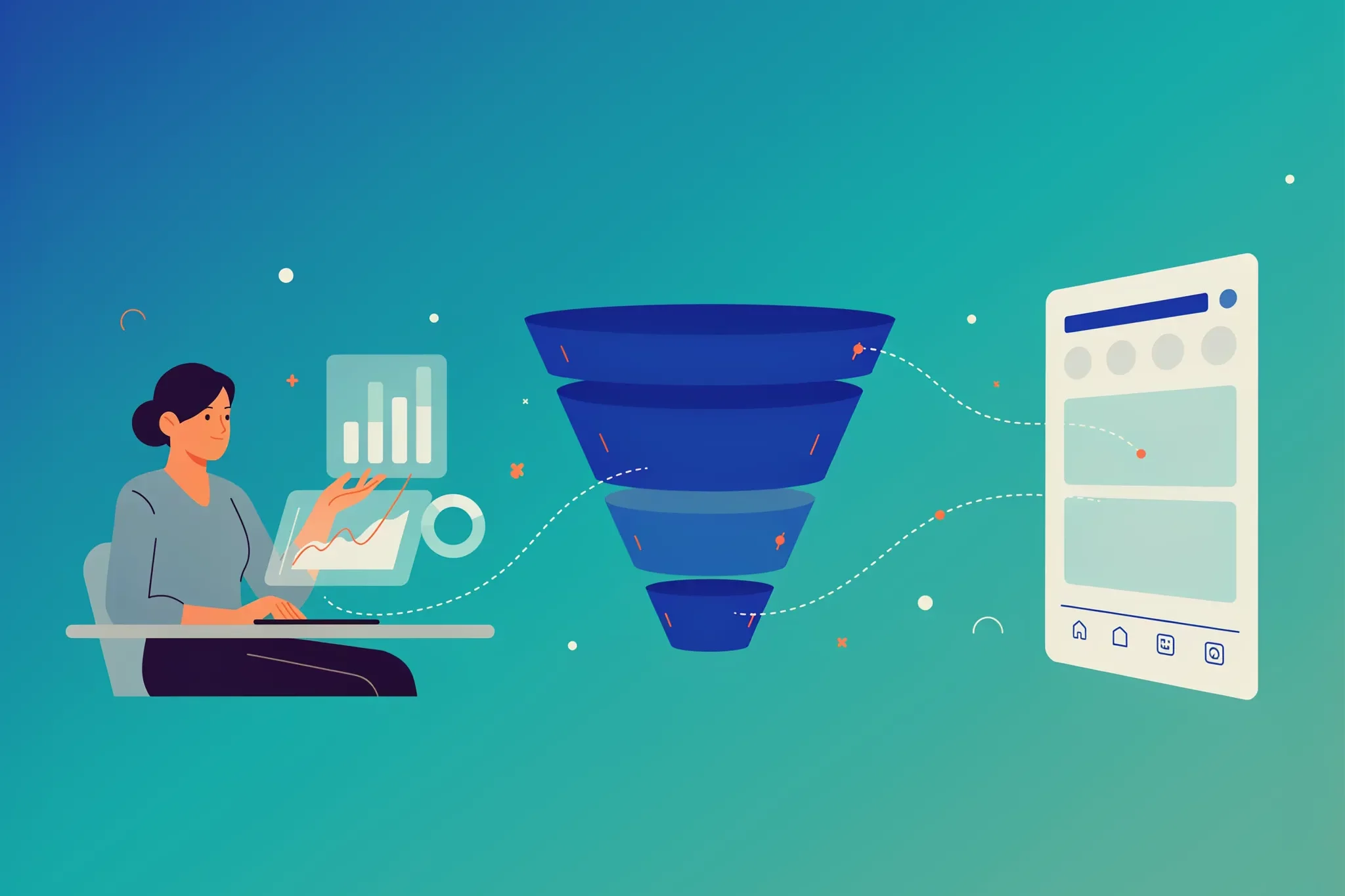
A successful website is rarely the result of good design alone. The highest-performing digital experiences are built on a deeper foundation: market research. When brands understand what their audience needs, expects, hesitates about, and responds to, they can make smarter UX, UI, and web design decisions that guide users more naturally toward conversion.
For agencies like Aumcore, market research is not a separate service that sits before design. It is the strategic engine that informs every step of the digital experience, from site architecture and messaging to navigation, content hierarchy, and checkout flow.
The result is a website that does more than look polished. It works harder, communicates more clearly to the right audience, and converts more efficiently.
Why Market Research Should Shape UX
Many websites are built around internal assumptions:
- What the business thinks is important
- What leadership wants to highlight
- What competitors seem to be doing
But users rarely behave the way brands expect them to.
Market research closes that gap by replacing guesswork with evidence. By studying audience behavior, motivations, pain points, search intent, and purchasing patterns, businesses can design experiences that reflect how people actually browse and buy.
What Research Helps Improve
Market research helps teams:
- Prioritize the content users care about most
- Structure navigation around real decision-making behavior
- Reduce friction at critical conversion points
- Align design choices with user expectations
- Improve clarity, trust, and speed across the user journey
In other words, market research helps transform a website from a digital brochure into a conversion-focused platform.
The Full Journey: From Insight to Interface
Strong digital experiences usually follow a clear strategic process.
Step 1: Market Research
Market research identifies who the audience is and how they behave.
Step 2: Audience Insights
Audience insights reveal what users need at each stage of the journey.
Step 3: UX Strategy
UX strategy translates those insights into structure, user flows, and priorities.
Step 4: UI Design
UI design uses visual cues to support clarity, usability, and action.
Step 5: Web Design & Development
Web design brings the entire experience to life in a way that feels intuitive, credible, and aligned with the brand.
This is where Aumcore’s market research services create value beyond reporting. The data does not just describe the audience. It informs what should happen on the page.
Example Applications
If research shows that users are highly comparison-driven, the UX may require:
- Side-by-side product comparison blocks
- Clearer filters
- Stronger information hierarchy
If users are mobile-heavy and impatient, the experience may require:
- Shorter conversion paths
- Larger tap targets
- Fewer form fields
If trust is the main barrier, the interface should surface:
- Testimonials
- Certifications
- Case studies
- Guarantees
earlier in the journey.
What Audience Insights Reveal
Market research can uncover patterns that directly influence UX and design decisions.
Key Research Inputs
Behavioral Analytics
Behavioral analytics reveal:
- Click paths
- Bounce points
- Exit pages
These insights show how users move through the site and where they disengage.
Heatmaps & Scroll Depth
Heatmaps and scroll-depth data show:
- What users notice
- What they ignore
- How far they scroll
- Which elements attract attention
Surveys & User Interviews
Survey responses and user interviews uncover:
- Motivations
- Concerns
- Objections
- Decision-making behavior
Search & Keyword Data
Search and keyword research reveal the language users actually use when searching for products, services, or solutions.
Conversion Funnel Analysis
Conversion funnel analysis highlights where users drop off and where friction exists in the journey.
Audience Segmentation
Segmentation data shows how behavior changes based on:
- Audience type
- Device
- Location
- Intent
- Stage in the buying journey
Questions These Insights Help Answer
Research makes it easier for UX and design teams to answer critical questions such as:
- What should the homepage emphasize first?
- Which pages need more explanation and which need less?
- Where do users lose confidence?
- Which CTAs are most likely to drive action?
- How should the journey differ for new visitors versus repeat buyers?
How Research Changes UX Decisions
Navigation Becomes Behavior-Driven
Navigation is often where research has the biggest impact.
If analytics show that visitors repeatedly search for pricing, services, or case studies, those pages should not be buried in secondary menus. They should be surfaced clearly in primary navigation or supporting content blocks.
B2B Navigation Example
For a B2B brand, this often means prioritizing solution-based navigation over product-heavy or brand-led labels.
A visitor searching for “enterprise SEO services” or “B2B lead generation” needs quick access to relevant use cases, not a broad list of corporate categories.
DTC Navigation Example
For a DTC brand, navigation may need to reflect shopping intent and lifestyle-driven behavior.
If users browse by:
- Collection
- Product type
- Use case
- Lifestyle category
the menu should support that behavior with simple, familiar labels and fewer decision points.
Content Hierarchy Follows Intent
Research also changes what appears above the fold, what gets expanded, and what gets pushed lower on the page.
If users skim quickly and want proof before reading deeply, the strongest value proposition, social proof, and differentiators need to appear early.
Financial Services Example
If a financial services company learns that prospects care most about compliance and trust, the page hierarchy should prioritize:
- Credibility markers
- Client logos
- Regulatory reassurance
before introducing technical detail.
DTC Beauty Example
A DTC beauty brand may instead prioritize:
- Product benefits
- Ingredients
- Reviews
- Lifestyle imagery
because those elements align more closely with customer intent.
Checkout & Form Flows Become Friction-Light
Behavior data often reveals where users abandon forms or shopping carts.
Once friction is identified, UX improvements can include:
- Reducing unnecessary fields
- Breaking long forms into smaller steps
- Adding reassurance messaging
- Simplifying checkout paths
B2B Lead Generation Example
A B2B lead generation site may discover that users drop off when forms ask for too much information too early.
In response, the form flow could be simplified to:
- Name
- Company
with additional qualification fields moved later in the process.
DTC Checkout Example
A DTC brand may find that cart abandonment increases when shipping costs appear too late in the checkout process.
Solutions may include:
- Earlier shipping estimates
- Express checkout options
- Clear payment badges
- Simplified mobile checkout
B2B vs DTC: How Behavior Data Changes the Experience
Both B2B and DTC brands benefit from market research, but the design implications differ because buying behavior differs.
B2B Example: Simplifying Complex Decisions
A B2B software company may initially believe users want detailed feature explanations on the homepage.
Research, however, may show that visitors first want to understand:
- Outcomes
- Credibility
- Business fit
Analytics may also reveal that users leave the site when they encounter technical detail too early.
UX Adjustments
The UX team may then reorganize the site so navigation emphasizes:
- Solutions
- Industries
- Case studies
instead of technical modules.
The homepage may also shift from feature-heavy messaging to:
- Value-driven positioning
- Proof points
- Audience-specific pathways
A pricing page, demo request flow, and comparison content may also move closer to the primary journey.
This approach often improves lead quality because it reflects how B2B buyers evaluate solutions. They want to confirm relevance before investing time in deeper research.
DTC Example: Tightening the Purchase Journey
A DTC fashion or wellness brand may discover through heatmaps and mobile analytics that users scroll past long product stories but engage heavily with:
- Reviews
- Sizing guidance
- Visual proof
- Product benefits
The brand may also find that checkout abandonment increases on mobile when too many fields are required.
UX Adjustments
The updated experience may include:
- More compact product pages
- Reviews positioned higher on the page
- Simplified checkout flows
- Guest checkout functionality
- More visible payment methods
- Improved filtering and sorting
In this case, the goal is not to explain more. It is to reduce friction and make purchasing feel effortless.
How Aumcore Connects Research to Design
What makes this process effective is the connection between research and execution.
Aumcore’s market research services can inform the design process from the very beginning, ensuring the website is built around real user behavior rather than internal assumptions.
Areas Where Research Supports Design
Audience Segmentation
Audience segmentation can inform:
- Navigation structure
- Page templates
- User pathways
Customer Journey Mapping
Journey mapping helps shape:
- UX flows
- Conversion paths
- Content progression
Competitive Analysis
Competitive research helps identify opportunities to:
- Differentiate the brand
- Improve usability
- Fill market gaps
Content Strategy
Research-backed content strategy improves:
- Messaging
- Information hierarchy
- Conversion clarity
Conversion-Focused UX Decisions
Behavior data supports smarter decisions around:
- CTA placement
- Page structure
- Form design
- Checkout optimization
When research is integrated into UX, UI, and web design, the website becomes more than visually appealing. It becomes strategically aligned with user behavior and business goals.
Designing for Conversion, Not Just Aesthetics
A visually impressive website is not automatically an effective one.
Conversion happens when design:
- Reduces confusion
- Builds trust
- Supports decision-making
- Helps users move forward confidently
Market research gives designers the evidence needed to make those decisions intentionally.
That may involve:
- Rewriting a headline
- Moving a CTA higher on the page
- Simplifying checkout
- Redesigning navigation
- Reordering page content
Even small changes can produce meaningful gains when they are grounded in real user insights.
For brands focused on growth, this is the true value of connecting market research to UX. It transforms audience understanding into measurable performance.
Do Audience Insights Matter?
The relationship between market research and UX is not a one-time handoff. It is an ongoing strategic loop.
Audience insights inform design decisions. Design decisions influence user behavior. Behavior data then shapes the next round of optimization.
When executed well, this process creates digital experiences that feel intuitive for users and effective for businesses.
For Aumcore, that means helping brands do more than collect data or launch attractive websites. It means building digital experiences that reflect how audiences think, search, compare, and convert.



Tell us your thoughts in the comments